
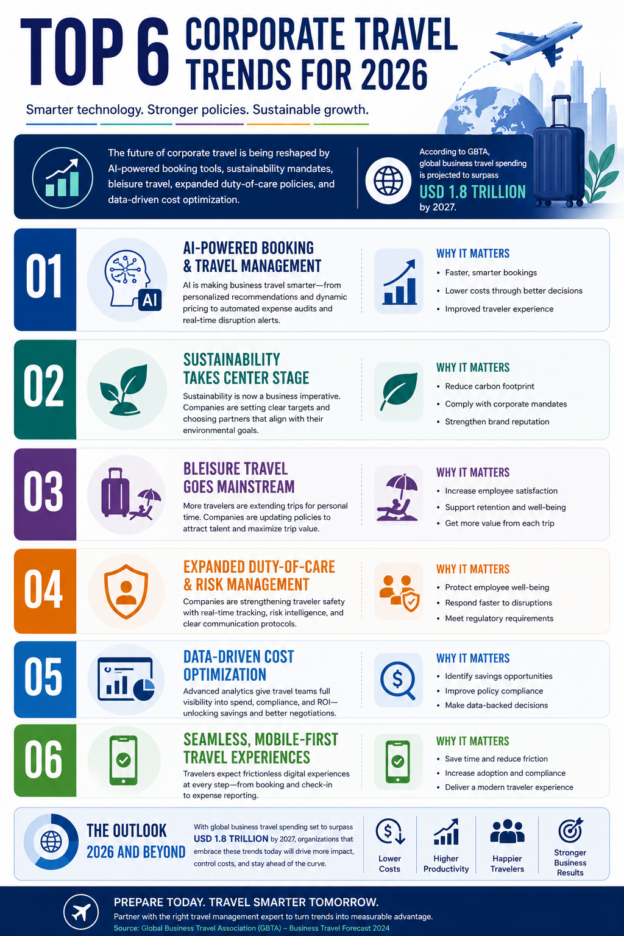
The future of corporate travel is being reshaped by AI-powered booking tools, sustainability mandates, bleisure travel, expanded duty-of-care policies, and data-driven cost optimization. According to the Global Business Travel Association (GBTA), global business travel spending is projected to surpass USD 1.8 trillion by 2027, making strategic preparation essential for organizations of every size.
Introduction
Corporate travel is entering a transformative decade as technology, climate accountability, and evolving employee expectations redefine how organizations move people across the globe. Govan Travels has observed these shifts closely, helping enterprises adapt travel programs for an industry that no longer rewards business-as-usual thinking. From AI-driven itinerary planning to carbon-conscious procurement, the next phase of corporate travel demands smarter strategies and forward-looking policies.
What is the Future of Corporate Travel in 2026?
Corporate travel in 2026 looks dramatically different from its pre-pandemic form, with hybrid work models, digital booking platforms, and personalized journeys taking center stage. A 2024 Deloitte Corporate Travel Study found that 79% of travel managers expect spending to match or exceed 2019 levels by 2026. Business trips are becoming more purposeful, focusing on high-value client meetings, conferences, and team-building events. The emphasis has shifted from frequency to value, where each trip must demonstrate clear ROI.
How is Artificial Intelligence Transforming Business Travel Management?
Artificial intelligence is automating everything from booking and expense reporting to predictive risk analysis across the corporate travel ecosystem. According to a 2024 McKinsey report, AI tools can reduce booking time by up to 60% while personalizing every itinerary.
Key AI applications shaping corporate travel include:
- Smart booking assistants that recommend optimal flights and hotels based on traveler preferences
- Predictive analytics that forecast travel costs and disruptions
- Automated expense management that scans receipts and categorizes spending
- Real-time chatbots that provide 24/7 traveler support and rebooking
- Risk intelligence platforms that monitor geopolitical, weather, and health alerts
AI adoption is no longer optional for companies aiming to streamline operations and improve traveler satisfaction.
Why are Sustainability and Green Travel Becoming Corporate Priorities?
Sustainability has become a non-negotiable factor in corporate travel as organizations face mounting pressure from regulators, investors, and employees. The European Union’s Corporate Sustainability Reporting Directive (CSRD) now requires large companies to disclose Scope 3 emissions, which include business travel.
Sustainable corporate travel practices gaining traction include:
- Choosing direct flights and rail alternatives where feasible
- Booking eco-certified hotels with verified green credentials
- Offsetting unavoidable emissions through reputable carbon programs
- Replacing low-ROI trips with virtual or hybrid meetings
- Tracking emissions through integrated travel management platforms
Green travel policies are quickly becoming a measurable ESG benchmark for global enterprises.
What are the Top Bleisure Travel Trends Companies Should Watch?
Bleisure travel, the blending of business and leisure trips, has surged as employees seek more flexible and rewarding work experiences. A 2024 American Express Global Business Travel report revealed that 76% of business travelers extend trips for personal leisure when policy allows. Forward-thinking organizations are updating policies to permit weekend add-ons, family-inclusive bookings, and remote work days at the destination. This trend strengthens employee retention while making corporate travel more attractive across generations.
How Can Companies Improve Traveler Safety and Duty of Care?
Duty of care has expanded well beyond emergency response, now encompassing physical safety, mental wellness, and cybersecurity for every traveling employee. The ISO 31030:2021 Travel Risk Management standard provides a globally recognized framework that more organizations are formally adopting.
Modern duty-of-care practices include:
- Real-time traveler tracking with consent-based location services
- Pre-trip risk assessments tailored to destination and traveler profile
- 24/7 emergency assistance through dedicated travel management platforms
- Mental health resources and jet-lag management support
- Cybersecurity briefings for travelers handling sensitive data
A robust duty-of-care framework protects both employees and corporate reputation.

What Cost Optimization Strategies Will Define Corporate Travel?
Cost optimization is evolving from basic supplier negotiation into data-driven travel intelligence powered by analytics and benchmarking tools. The GBTA 2024 Business Travel Index reports that companies using consolidated travel management platforms save an average of 15-20% on annual travel spend. Dynamic pricing, preferred-supplier programs, and automated policy-compliance tools are reshaping how budgets are managed. Smart cost control now balances savings with traveler experience to ensure long-term program sustainability.
References
- Global Business Travel Association (GBTA) Business Travel Index Outlook 2024
- Deloitte 2024 Corporate Travel Study
- McKinsey & Company: The Future of Business Travel Report 2024
- European Commission: Corporate Sustainability Reporting Directive (CSRD)
- ISO 31030:2021 Travel Risk Management Guidelines
- American Express Global Business Travel 2024 Trends Report